20th May 2026.
Independent Study Highlights Social Impact of Westwick Row Ideas Exchange.
Share
An independent report has explored how deliberative community engagement processes can create social value in planning and development beyond the physical outcomes of a project itself.
Produced by the Community Design Research Lab at the University of Cambridge, the report examines the Ideas Exchange process developed as part of an engagement programme for Westwick Row, TOWN’s new neighbourhood in Leverstock Green, Hemel Hempstead, being delivered in partnership with The Crown Estate.
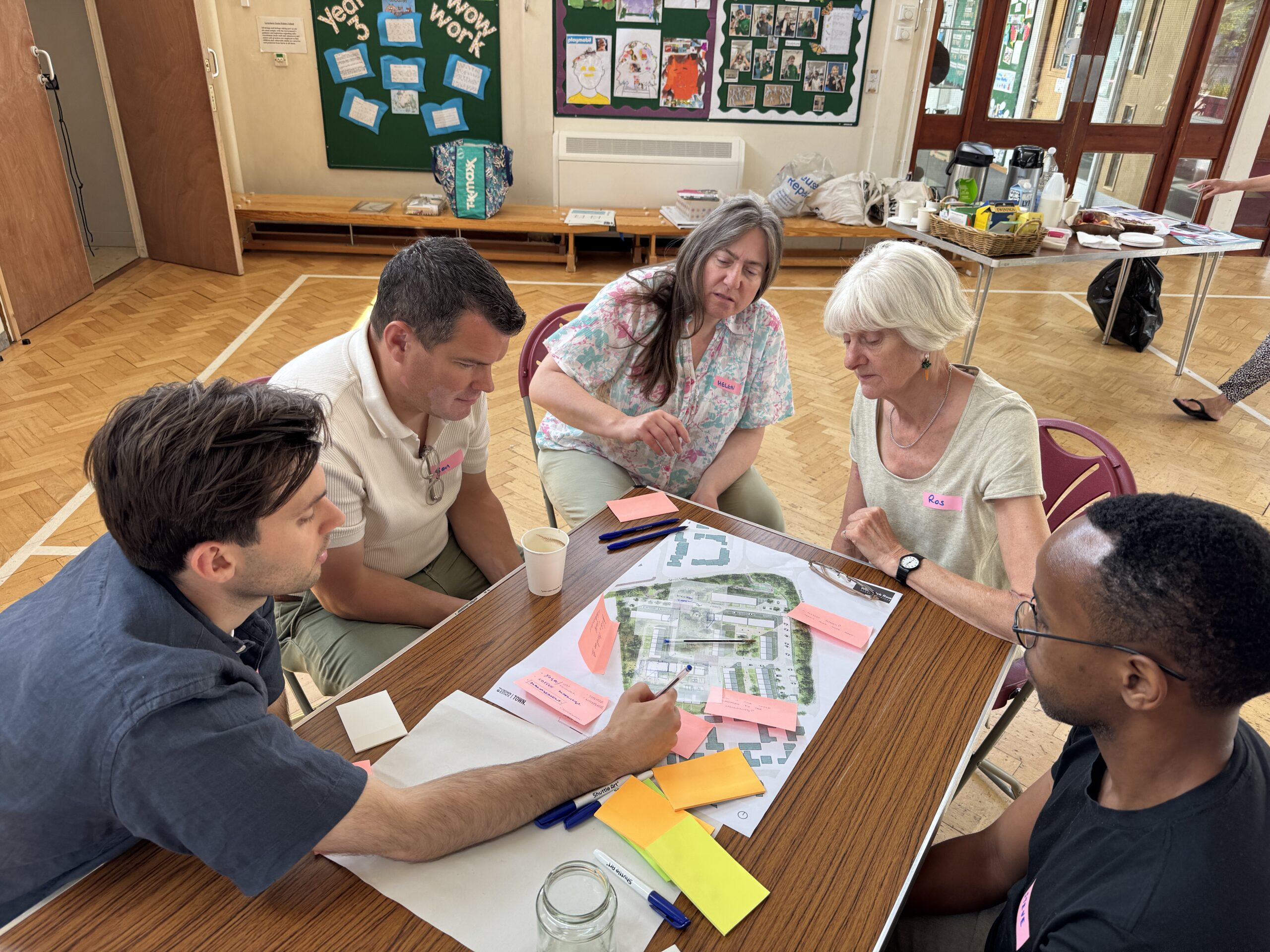
The study focused on the Westwick Row Ideas Exchange, a deliberative assembly inspired by citizens’ assemblies and sortition-based engagement. A group of local residents, selected through a civic lottery, worked alongside architects, developers and landowners over an extended period to help shape the emerging masterplan.
The research found that the process created value in ways that extended beyond direct influence on the scheme design itself. Participants described increased trust between residents and project teams, stronger feelings of agency and efficacy, and the formation of new social connections within the local area.
Three key themes emerged from the research:
Efficacy, trust and hope
The report found that long-term engagement and responsive codesign helped build trust between residents, designers and developers. Participants said seeing ideas reflected in revised designs between sessions strengthened confidence that their involvement genuinely mattered. The process also challenged assumptions about who holds expertise in planning and development, with residents contributing lived experience and technical knowledge throughout the programme.
“Increased levels of trust and hope between actors contribute to a sense of efficacy which was expressed as newfound belief in the agency to make meaningful change”
Future-oriented care
The report found the process encouraged participants to think beyond their own immediate interests and consider the long-term social and environmental future of the neighbourhood. Conversations around flooding and water management evolved into broader discussions about ecosystems, habitats and care for the wider environment.
“The Ideas Exchange became a shared space of caring for social and ecological communities beyond the present.”
Peripheral social ties
The report also highlighted the importance of social connections created through the process. Participants described informal encounters and conversations with fellow members outside the workshops. The report notes these kinds of peripheral ties play an important role in social resilience and wellbeing.
“…peripheral ties created in the assembly extended to daily life as informal encounters such as greetings in the supermarket or the bus stop…These peripheral social ties significantly contribute to social resilience and quality of life.”
The report argues that deliberative assemblies could play a larger role in planning and development in future, particularly as the industry looks for more meaningful and trusted forms of public participation.
Recommendations include introducing engagement earlier in the design process, establishing post-design assemblies to support neighbourhood stewardship and increasing training for developers, architects and planners working with deliberative engagement methods.
The Ideas Exchange formed part of a wider engagement programme for Westwick Row, alongside broad public consultation, engagement with a renters’ panel and a codesign process with a cohousing group involving prospective future residents.
The report was authored by Gustav Kjær Vad Nielsen, co-founding member of the Community Design Research Lab and Doctoral Researcher at the University of Luxembourg.