Our Impact
We create homes and neighbourhoods that support individual wellbeing, strong communities and a healthier planet. Our Impact Framework shapes every project from early concept through design, delivery and post-occupancy, helping us measure outcomes ranging from health and social connection to energy use and carbon emissions. Through post-occupancy research and engagement with residents, we use these insights to improve our approach over time.
Our approach is organised around three priorities: the wellbeing of individuals, communities and the planet.
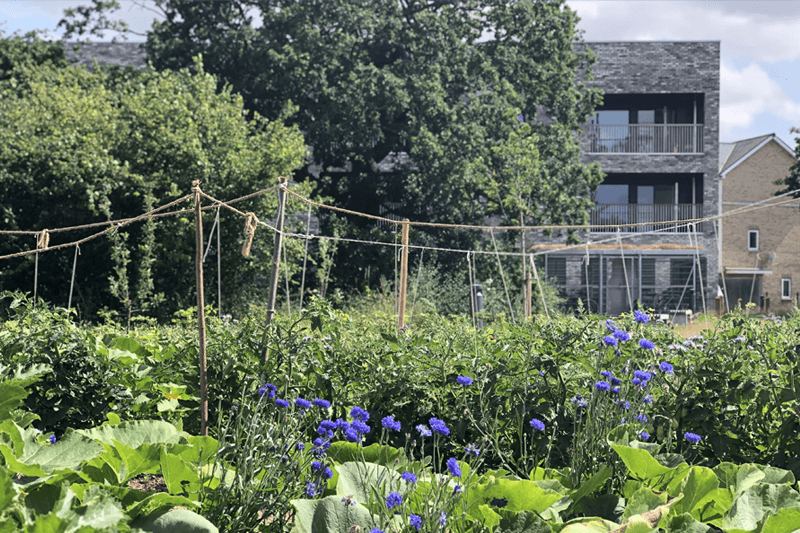
Planetary wellbeing
We use low-carbon materials and energy-efficient design approaches, while supporting biodiversity and more sustainable ways of living.
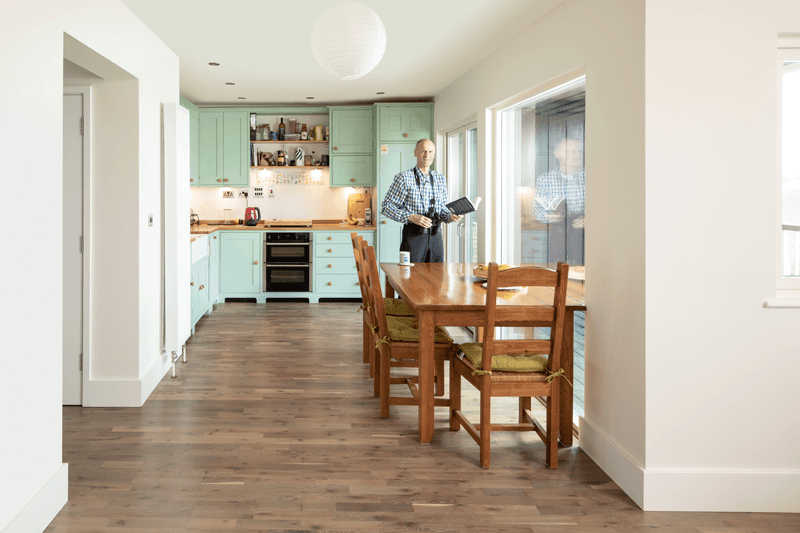
Individual wellbeing
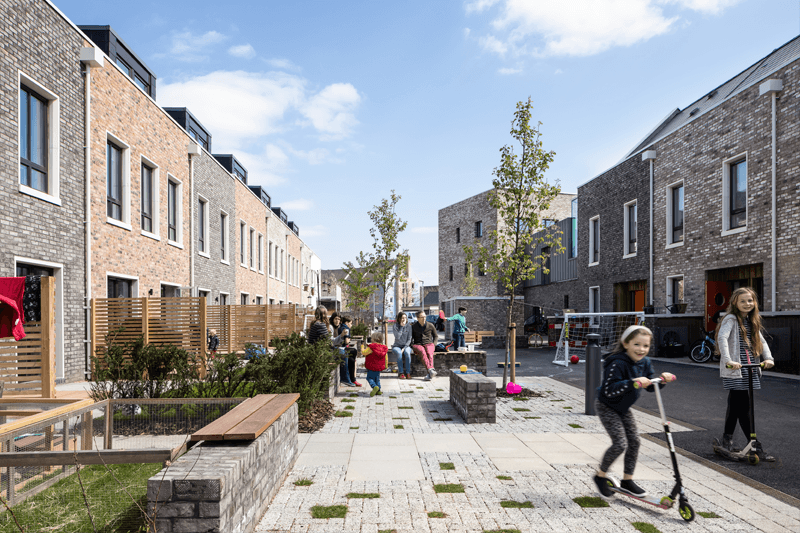
We support health, comfort and autonomy through well-designed, adaptable homes. Our homes and neighbourhoods support affordability, everyday convenience and children’s independence.
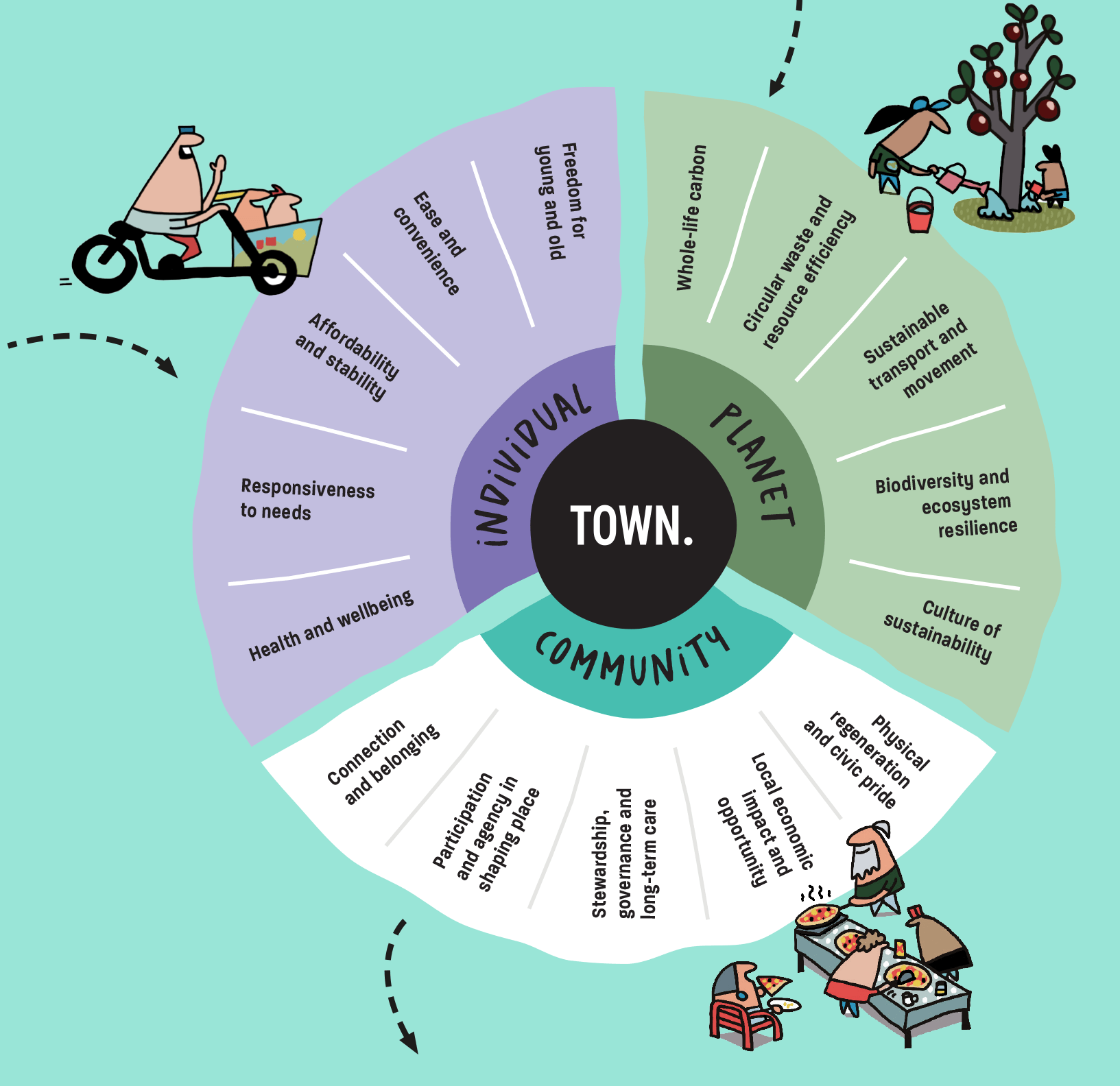
Community wellbeing
We design places for connection and mutual support, involving residents and local communities in shaping their neighbourhoods and supporting shared resources, learning and long-term stewardship.
Our approach is organised around three priorities: the wellbeing of individuals, communities and the planet.
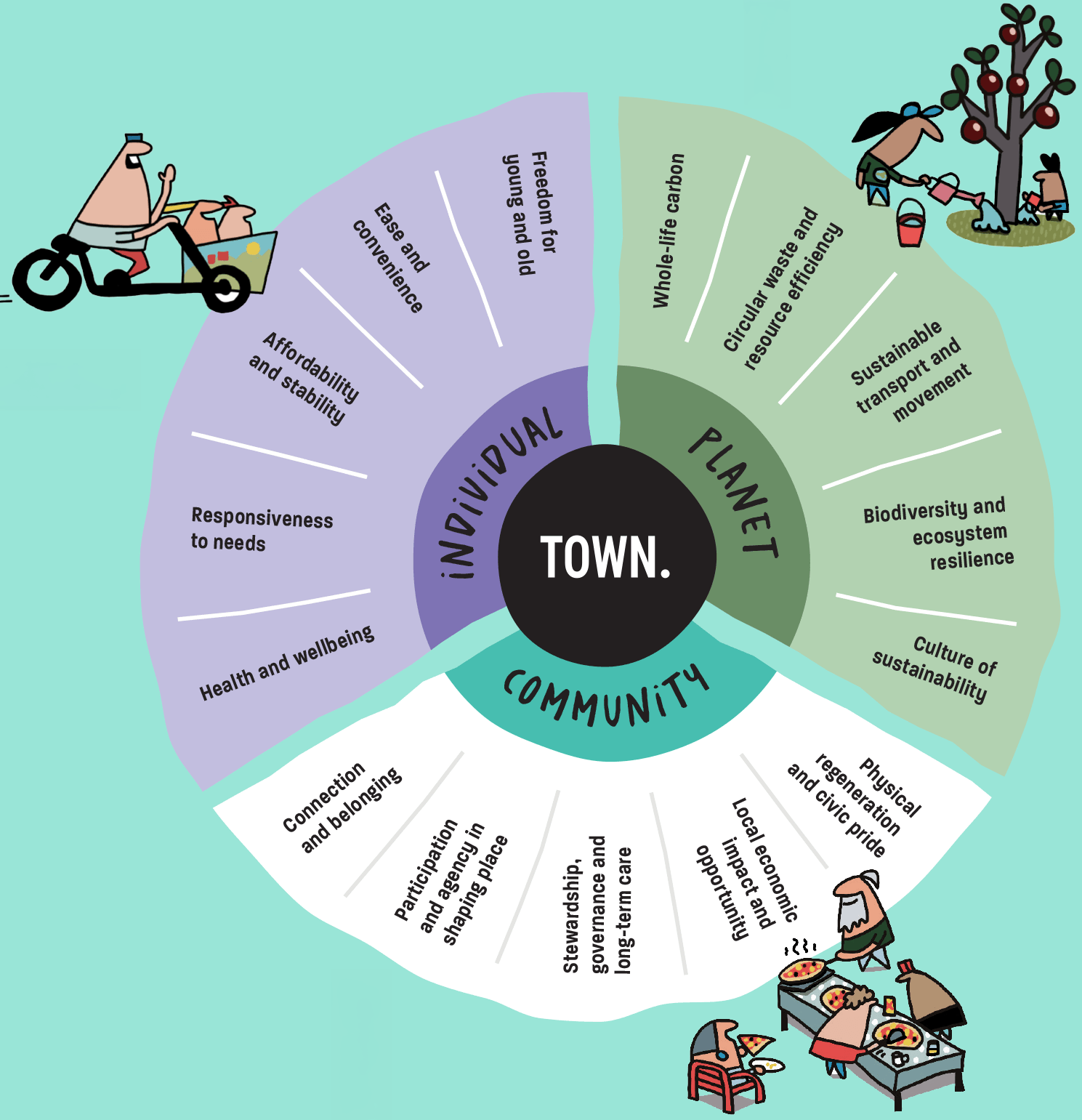
Individual wellbeing
We support health, comfort and autonomy through well-designed, adaptable homes. Our homes and neighbourhoods support affordability, everyday convenience and children’s independence.
Community wellbeing
We design places for connection and mutual support, involving residents and local communities in shaping their neighbourhoods and supporting shared resources, learning and long-term stewardship.
Planetary wellbeing
We use low-carbon materials and energy-efficient design approaches, while supporting biodiversity and more sustainable ways of living.
How we apply our Impact Framework
The framework is structured around clear objectives that can be applied and measured throughout the lifecycle of a project.
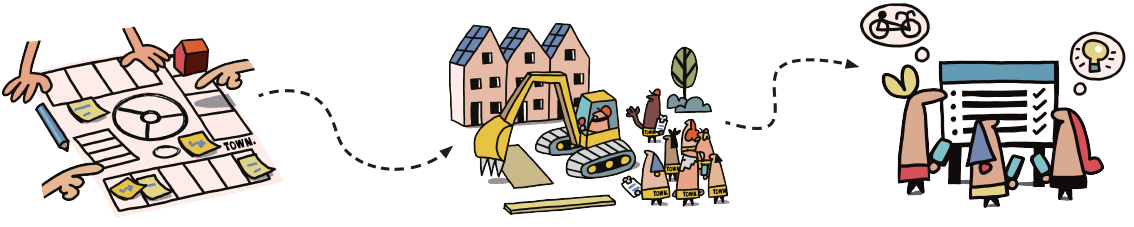
1. Project selection
We use the Impact Framework to assess each project’s potential and identify opportunities to create meaningful social and environmental value.
2. Design, planning and delivery
For each project, we set measurable targets linked to the Impact Framework. These guide design choices, shape engagement with residents and partners and support decision making throughout delivery.
3. Evaluation
Once projects are complete, we use the Impact Framework to understand their impact. We speak with residents, assess how spaces are used and review building performance to understand what works well and what we can improve.
How we apply our Impact Framework
The framework is structured around clear objectives that can be applied and measured throughout the lifecycle of a project.
1. Project selection
We use the Impact Framework to assess each project’s potential and identify opportunities to create meaningful social and environmental value.
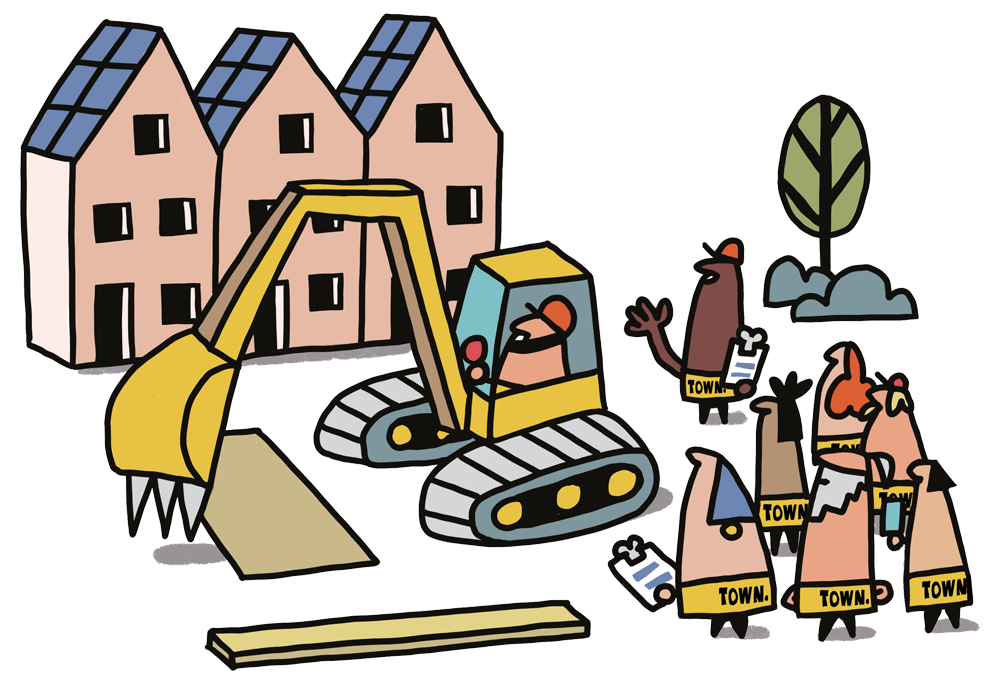
2. Design, planning and delivery
For each project, we set measurable targets linked to the Impact Framework. These guide design choices, shape engagement with residents and partners and support decision making throughout delivery.
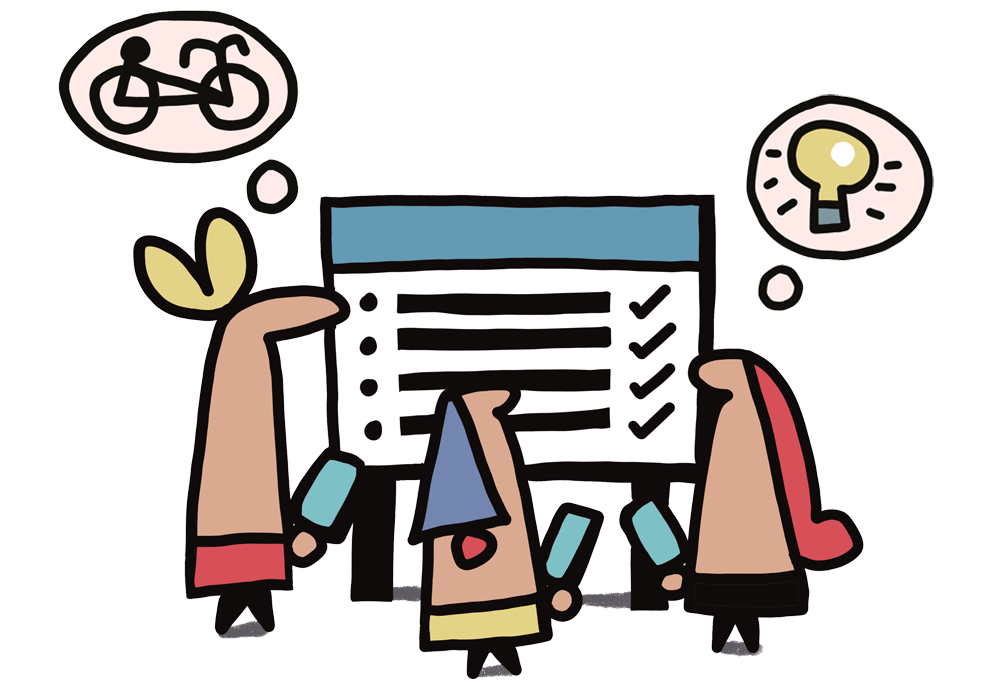
3. Evaluation
Once projects are complete, we use the Impact Framework to understand their impact. We speak with residents, assess how spaces are used and review building performance to understand what works well and what we can improve.

Designing for children
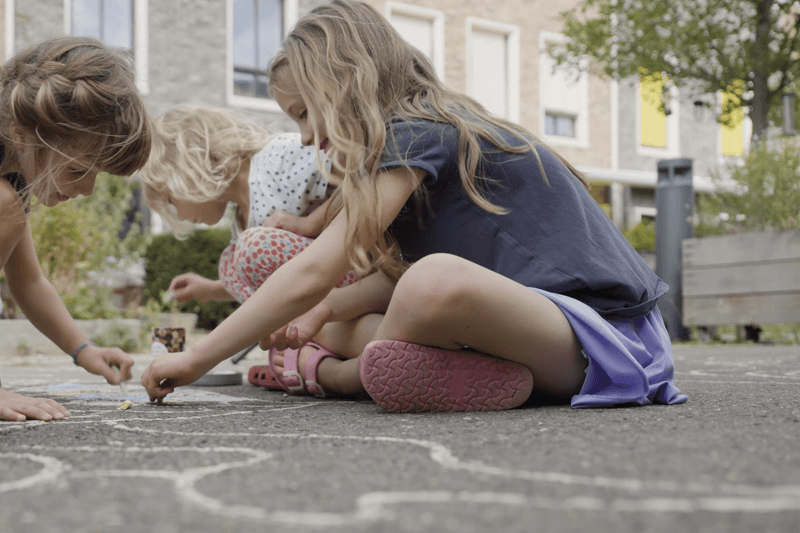
Shared, car-free streets provide space for independent play and socialising
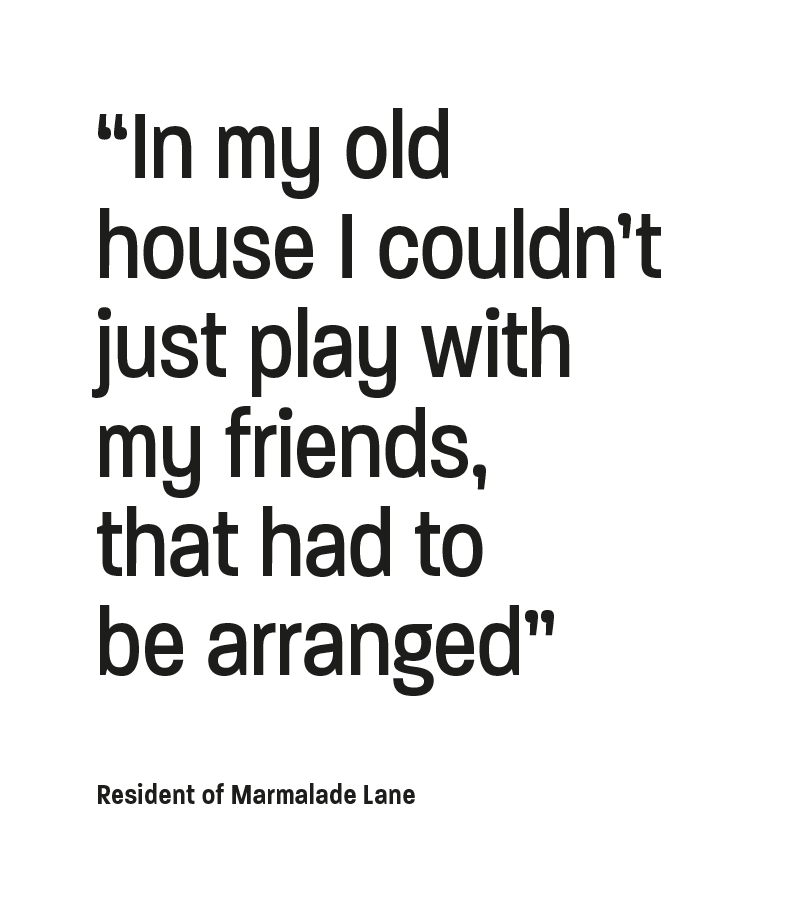
Childhood independence and freedom
Streets and shared spaces shape how children live, play and build friendships. We design neighbourhoods that support independence, safety and everyday social life.
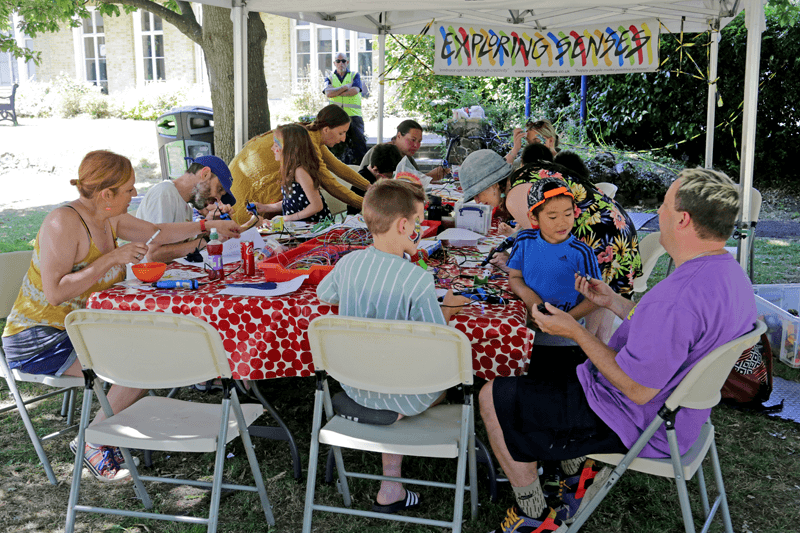
We use a range of tools to help children explore and shape new neighbourhoods
Engaging young people
We work with schools and youth organisations to involve children and young people in shaping our projects.
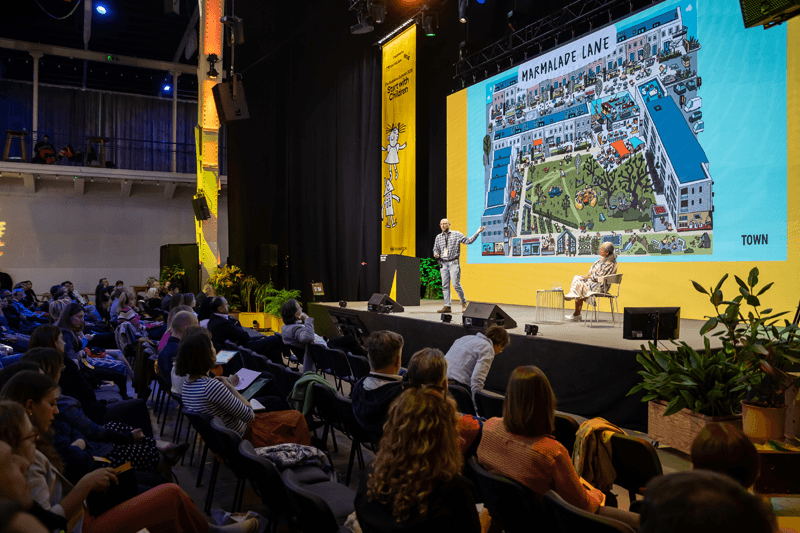
TOWN opened the Start with Children Summit in 2025, bringing together policy-makers and practitioners focused on child-friendly cities
Child-centred design
We are a leader in child-focused design, including our Child-Friendly Design Strategy at Hartree, which shaped streets, landscape and public space across the district.
Designing for children
Childhood independence and freedom
Streets and shared spaces shape how children live, play and build friendships. We design neighbourhoods that support independence, safety and everyday social life.
Shared, car-free streets provide space for independent play and socialising
Engaging young people
We work with schools and youth organisations to involve children and young people in shaping our projects.
We use a range of tools to help children explore and shape new neighbourhoods
Child-centred design
We are a leader in child-focused design, including our Child-Friendly Design Strategy at Hartree, which shaped streets, landscape and public space across the district.
TOWN opened the Start with Children Summit in 2025, bringing together policy-makers and practitioners focused on child-friendly cities
A sense of community
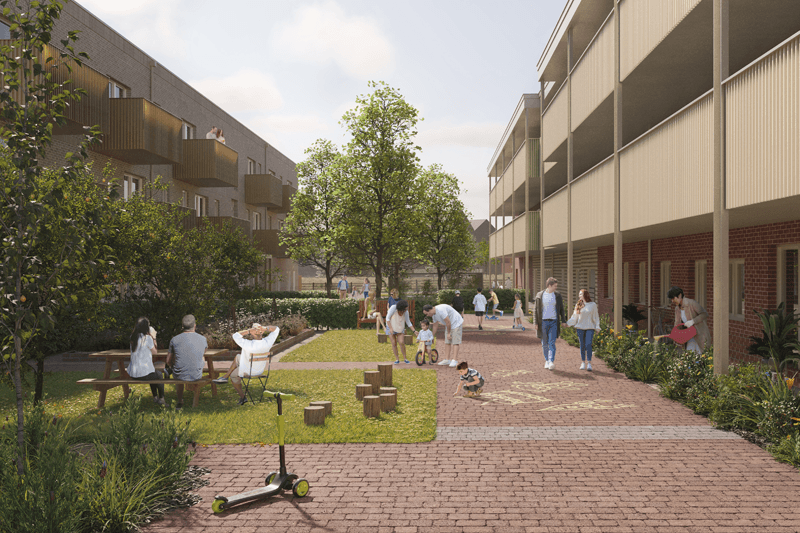
Two cohousing communities share a car-free street at Northstowe designed for daily interaction with neighbours
Everyday interaction
Streets and shared spaces enable informal, daily contact, making it easy for neighbours to know each other and for a sense of community to develop over time.
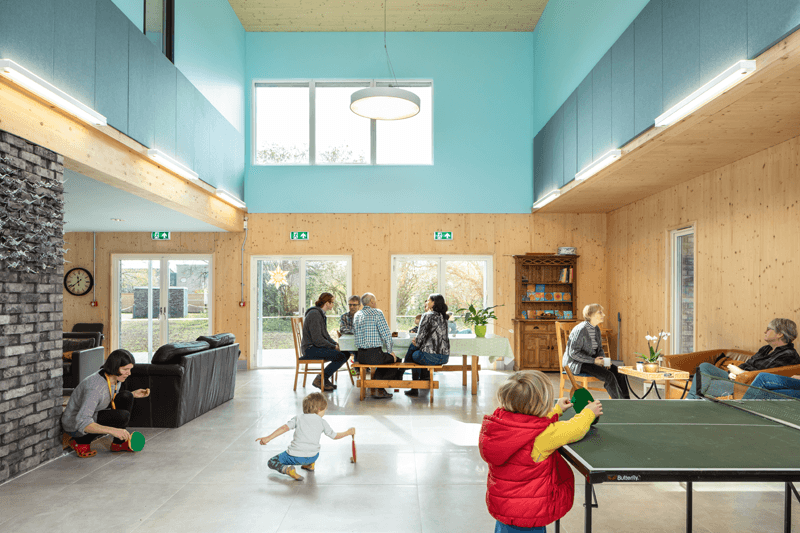
The common house provides a space for everyday interactions with neighbours
Tackling loneliness
Through a mix of physical and social design approaches, we create opportunities for connection, helping reduce the risk of social isolation.
A sense of community
Everyday interaction
Streets and shared spaces enable informal, daily contact, making it easy for neighbours to know each other and for a sense of community to develop over time.
Two cohousing communities share a car-free street at Northstowe designed for daily interaction with neighbours
Tackling loneliness
Through a mix of physical and social design approaches, we create opportunities for connection, helping reduce the risk of social isolation.
The common house provides a space for everyday interactions with neighbours

Compact, liveable neighbourhoods

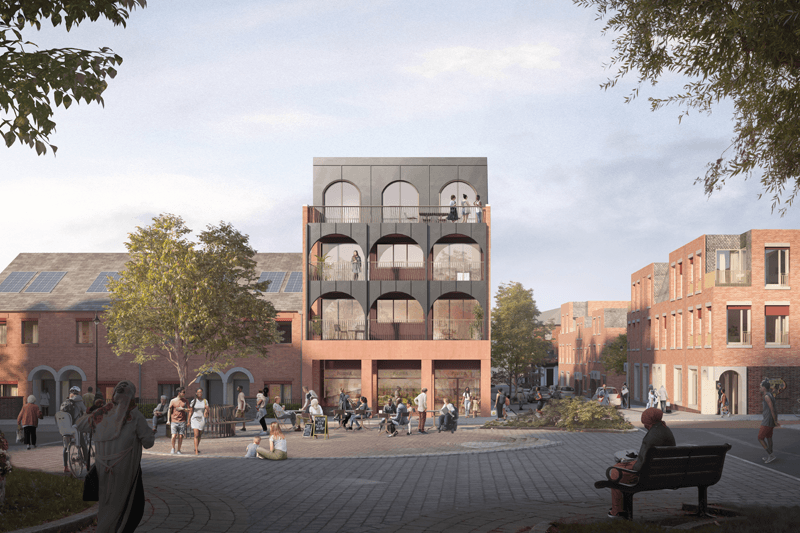
Proposals to reinstate a historic street in Milton Keynes will improve pedestrian connections in the town
Walkable neighbourhoods
We deliver homes at a range of densities, within easy reach of shops, schools and public transport, supporting daily journeys on foot or by bike.
Homes at Angel Yard support a mixed community shaped through codesign
Homes that meet local need
A mix of tenures and house types supports a balanced community and responds to local demand.
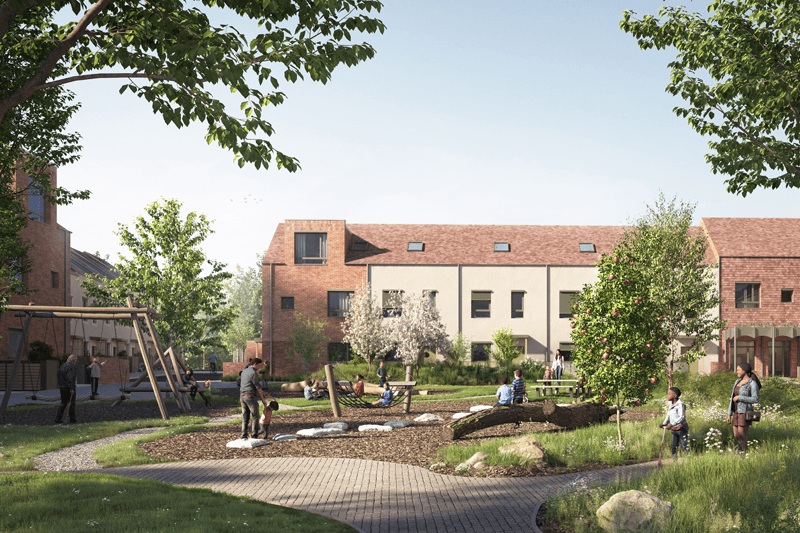
At Westwick Row, car parking is contained at the edge of the site to free up space for shared gardens and streets
Less reliance on cars
Parking is carefully managed and sensitively located, to prioritise nature, people-friendly streets and public space.
Daily convenience
Shared facilities such as workspaces, laundries and gyms make everyday life easier and reduce the need to travel.
Compact, liveable neighbourhoods
Walkable neighbourhoods
We deliver homes at a range of densities, within easy reach of shops, schools and public transport, supporting daily journeys on foot or by bike.
Proposals to reinstate a historic street in Milton Keynes will improve pedestrian connections in the town
Homes that meet local need
A mix of tenures and house types supports a balanced community and responds to local demand.
Homes at Angel Yard support a mixed community shaped through codesign
Less reliance on cars
Parking is carefully managed and sensitively located, to prioritise nature, people-friendly streets and public space.
At Westwick Row, car parking is contained at the edge of the site to free up space for shared gardens and streets
Daily convenience
Shared facilities such as workspaces, laundries and gyms make everyday life easier and reduce the need to travel.
Participation, codesign and engagement
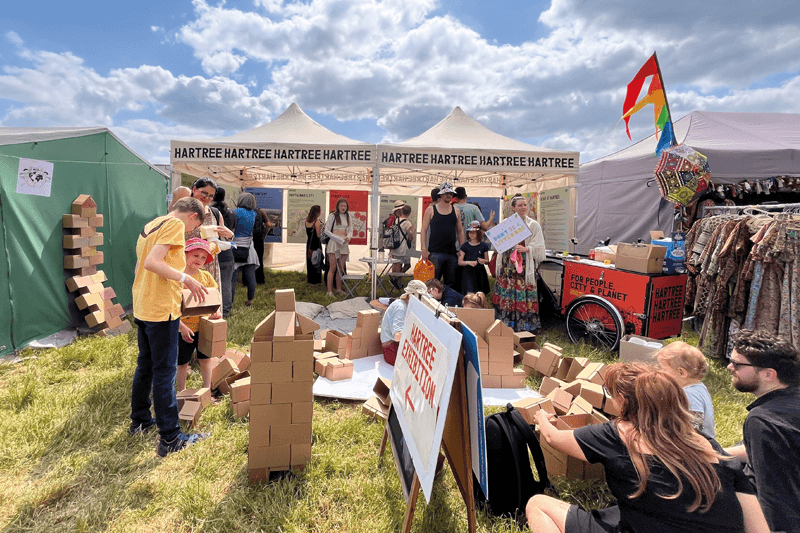
A city-wide roadshow for Hartree brought the proposals directly to local communities
Shaped by many
We seek out less-heard voices, using workshops, events, roadshows and digital platforms to engage people throughout the design process.
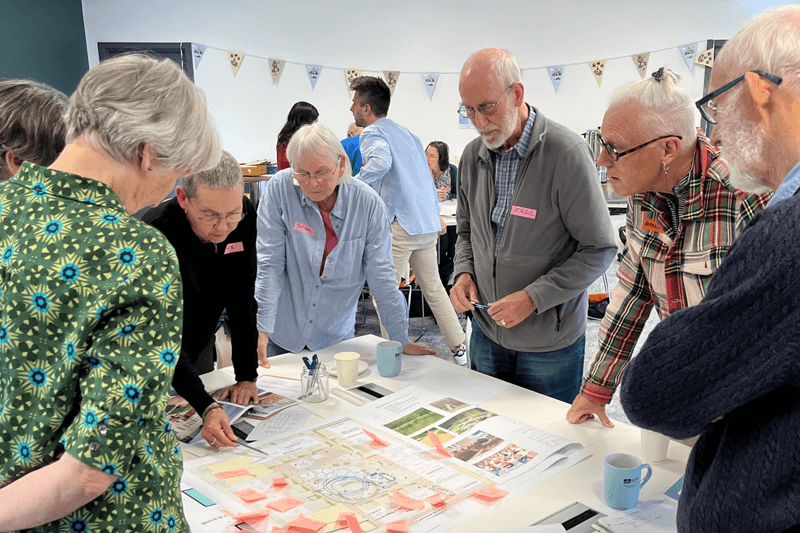
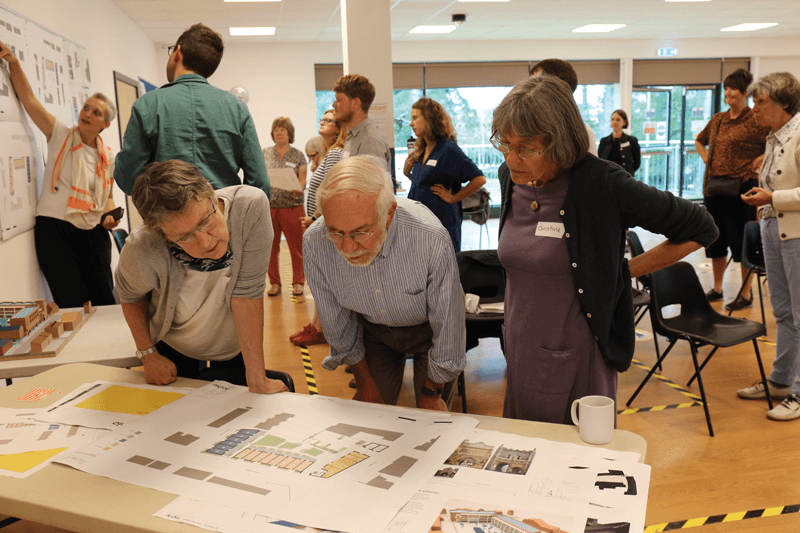
Codesign workshops for Northstowe Cohousing directly informed the layout of the community and its shared spaces
Working with future residents
We work with future residents through codesign to shape the homes and neighbourhoods they will live in.
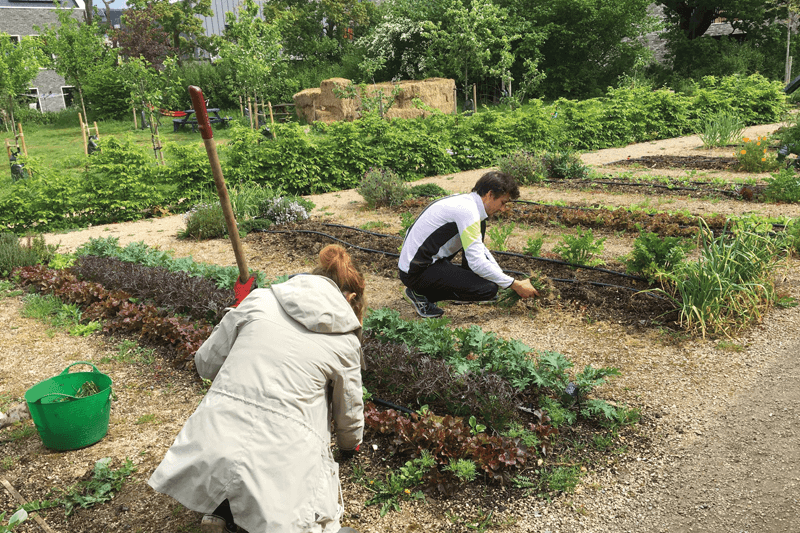
Resident working groups manage the shared spaces, including gardens and allotments
Long-term stewardship
Management and stewardship strategies ensure that places remain looked after and valued by their residents and local communities over time.
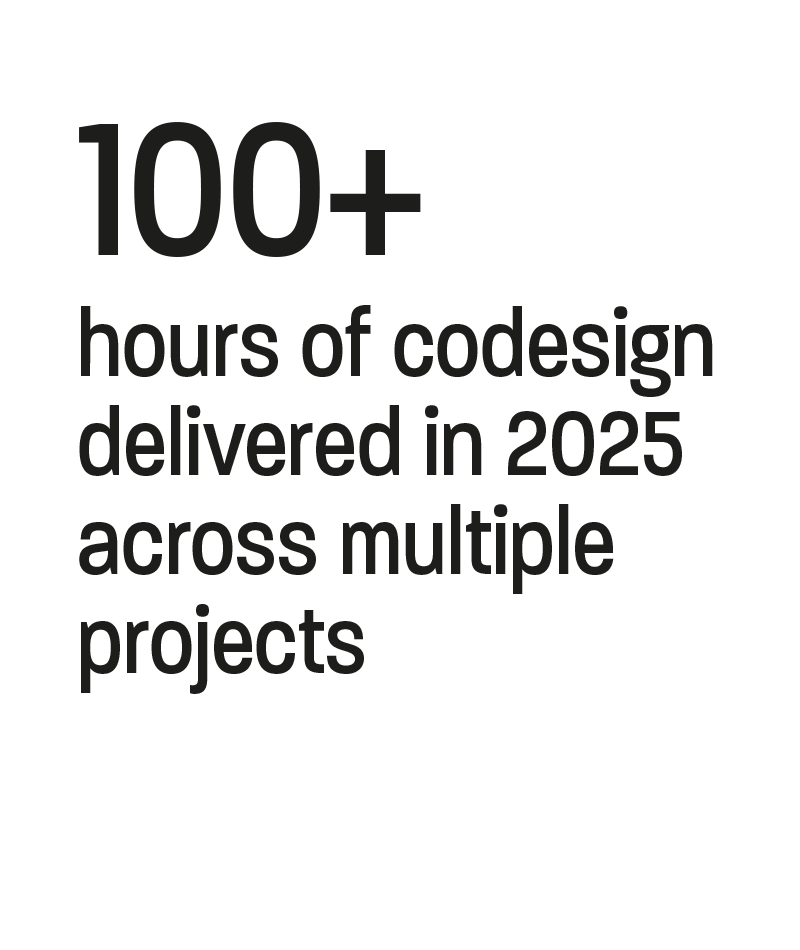
Participation, codesign and engagement
Shaped by many
We seek out less-heard voices, using workshops, events, roadshows and digital platforms to engage people throughout the design process.
A city-wide roadshow for Hartree brought the proposals directly to local communities
Working with future residents
We work with future residents through codesign to shape the homes and neighbourhoods they will live in.
Codesign workshops for Northstowe Cohousing directly informed the layout of the community and its shared spaces
Long-term stewardship
Management and stewardship strategies ensure that places remain looked after and valued by their residents and local communities over time.
Resident working groups manage the shared spaces, including gardens and allotments
Carbon and resources
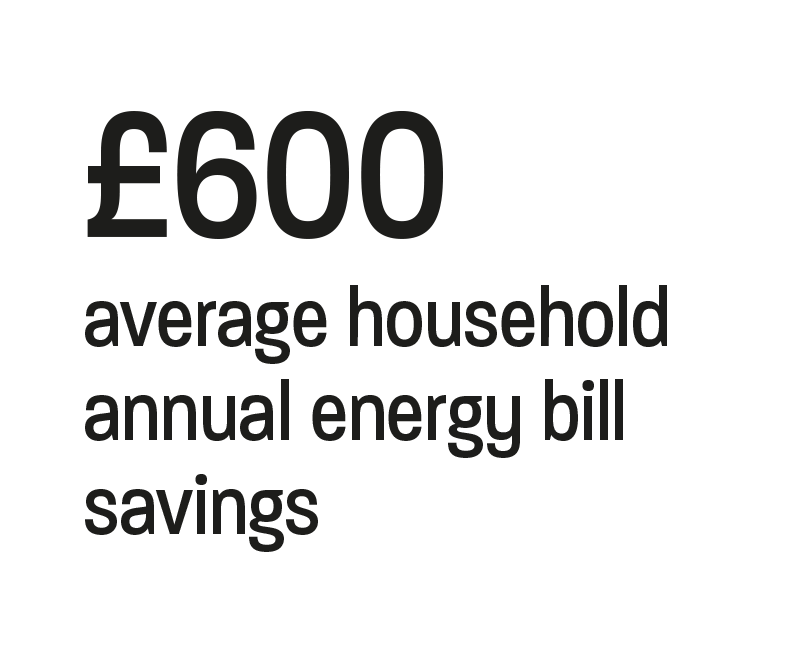
Low energy homes
Homes are designed to use less energy, helping residents reduce bills and improve comfort.
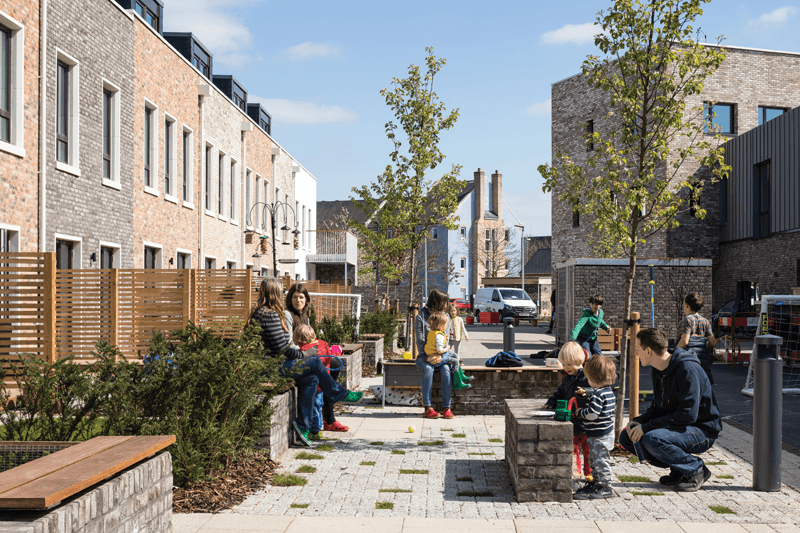
Only 31% of households at Marmalade Lane own a private car
Supporting sustainable living
Neighbourhood design encourages walking, cycling and shared resources, making lower-impact lifestyles easier.
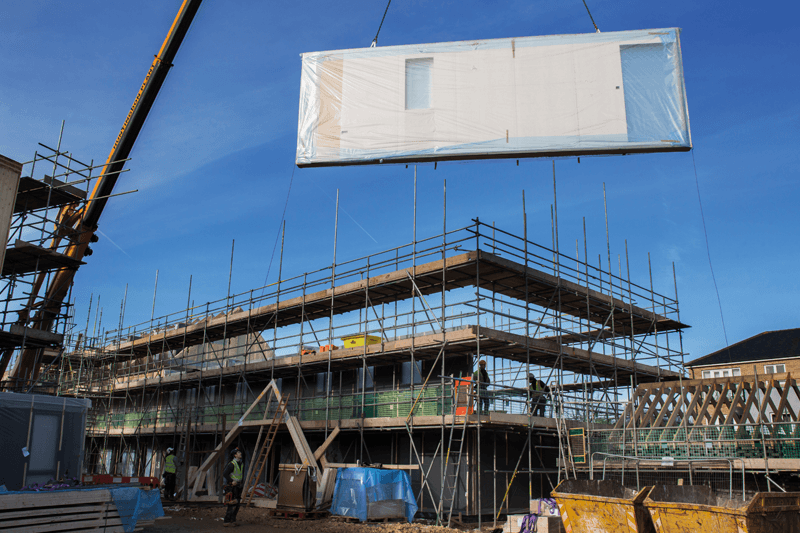
We build in line with current best practice guidelines including Passivhaus and LETI
Modern methods of construction
We use timber and other lower-carbon construction approaches where appropriate to reduce embodied carbon.
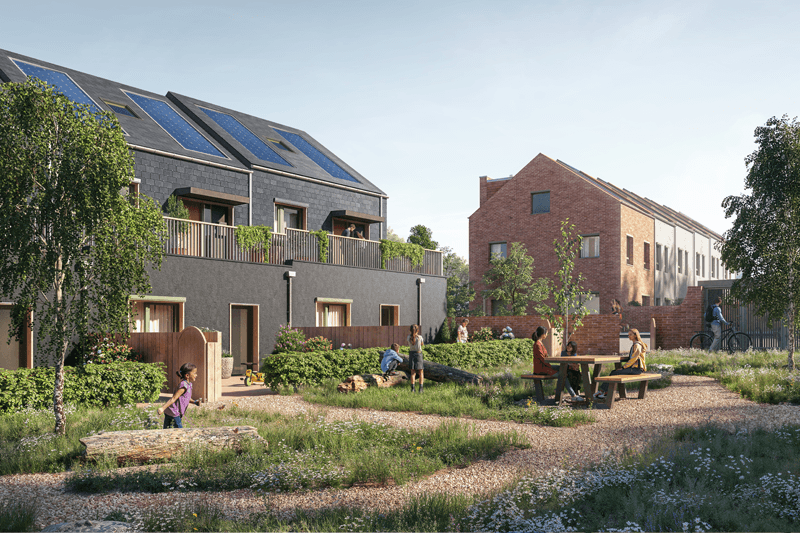
Green infrastructure, including SuDs, wildlife corridors and green roofs support biodiversity
Efficient, comfortable homes
Triple glazing, Mechanical Ventilation with Heat Recovery and Air Source Heat Pumps help keep homes warm, well ventilated and energy efficient year-round.
Carbon and resources
Low energy homes
Homes are designed to use less energy, helping residents reduce bills and improve comfort.
Supporting sustainable living
Neighbourhood design encourages walking, cycling and shared resources, making lower-impact lifestyles easier.
Only 31% of households at Marmalade Lane own a private car
Modern methods of construction
We use timber and other lower-carbon construction approaches where appropriate to reduce embodied carbon.
We build in line with current best practice guidelines including Passivhaus and LETI
Efficient, comfortable homes
Triple glazing, Mechanical Ventilation with Heat Recovery and Air Source Heat Pumps help keep homes warm, well ventilated and energy efficient year-round.
Green infrastructure, including SuDs, wildlife corridors and green roofs support biodiversity
Regeneration and reuse
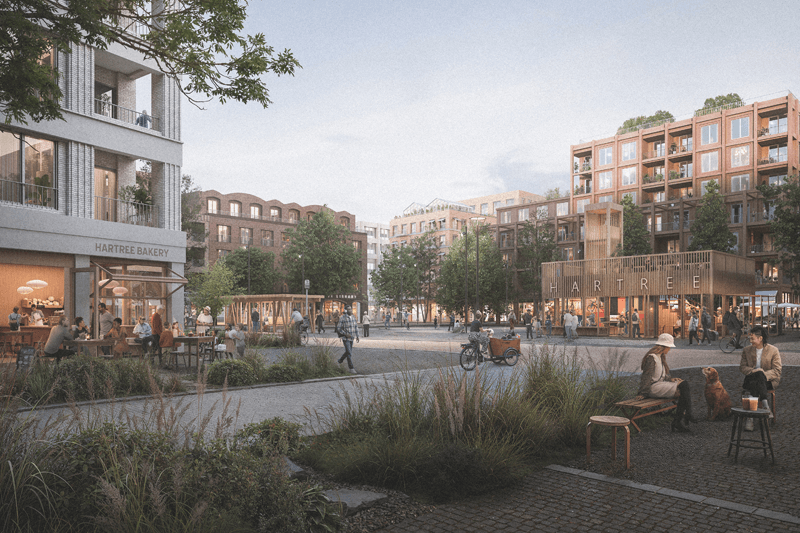
Proposals for Hartree saw the transformation of 47 hectares of brownfield land into a new urban quarter for Cambridge
Bring sites back into use
We prioritise brownfield land, transforming underused or vacant sites into new neighbourhoods.
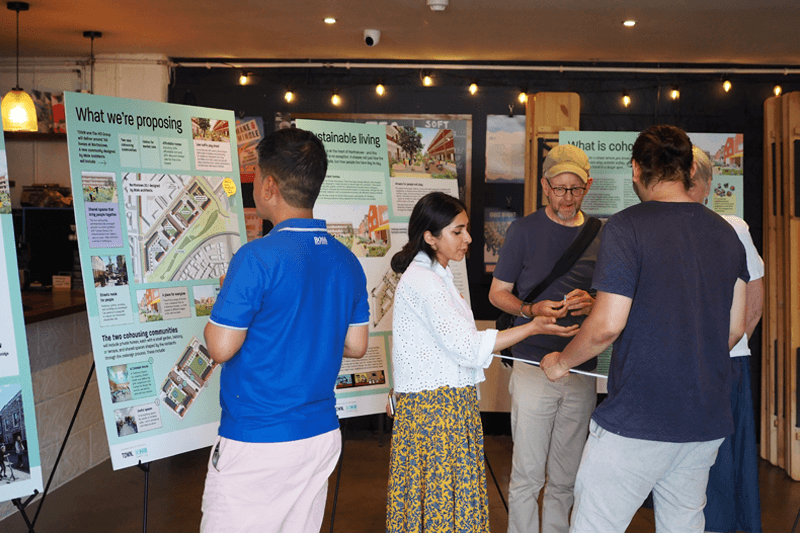
Local knowledge and input directly inform the design of new neighbourhoods
Working with existing communities
Our projects build on local identity, strengthening connections with people, places and networks.
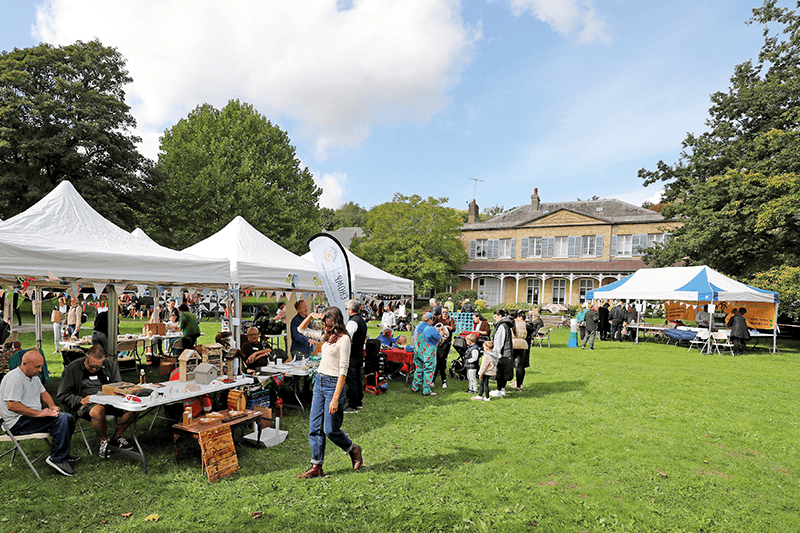
Meanwhile use at Moulsecoomb Place supported local groups and brought activity to the site
Meanwhile use and activation
Temporary uses, events and partnerships bring activity to sites early, supporting local organisations and testing ideas.
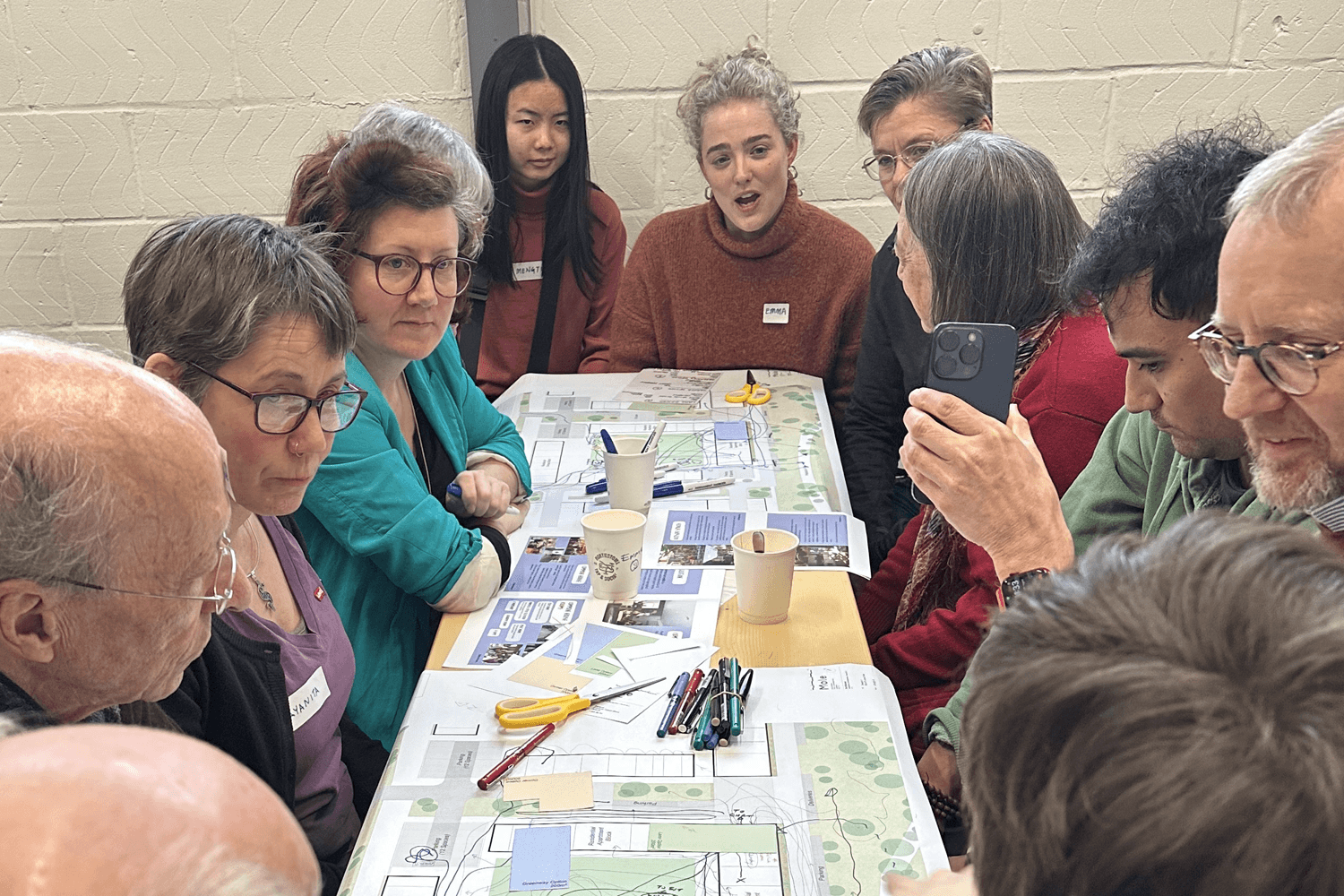
Working with future residents, we codesign how the neighbourhood will be managed and cared for over time
Long-term use
We support long-term stewardship, helping communities take an active role in how their neighbourhood evolves and is cared for.
Regeneration and reuse
Bring sites back into use
We prioritise brownfield land, transforming underused or vacant sites into new neighbourhoods.
Proposals for Hartree saw the transformation of 47 hectares of brownfield land into a new urban quarter for Cambridge
Working with existing communities
Our projects build on local identity, strengthening connections with people, places and networks.
Local knowledge and input directly inform the design of new neighbourhoods
Meanwhile use and activation
Temporary uses, events and partnerships bring activity to sites early, supporting local organisations and testing ideas.
Meanwhile use at Moulsecoomb Place supported local groups and brought activity to the site
Long-term use
We support long-term stewardship, helping communities take an active role in how their neighbourhood evolves and is cared for.
Working with future residents, we codesign how the neighbourhood will be managed and cared for over time
Find out more
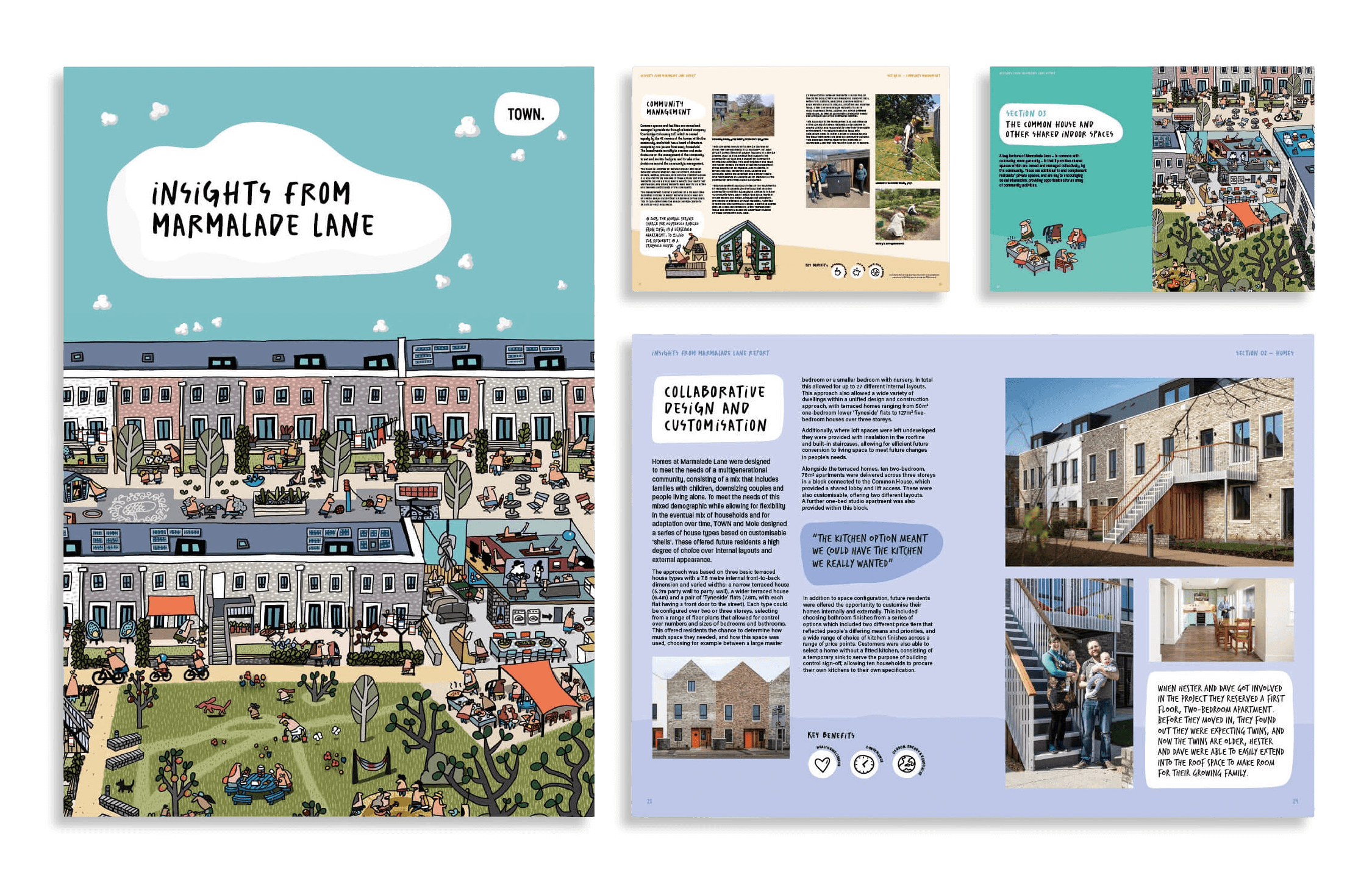
To understand how our approach performs in practice, read our post-occupancy study of Marmalade Lane, ‘Insights from Marmalade Lane’, which explores how design and stewardship shape daily life and long-term social value.
Find out more
To understand how our approach performs in practice, read our post-occupancy study of Marmalade Lane, ‘Insights from Marmalade Lane’, which explores how design and stewardship shape daily life and long-term social value.
If you’d like to find out more about TOWN’s Impact Framework, or discuss a project or opportunity with us, please get in touch.
If you’d like to find out more about TOWN’s Impact Framework, or discuss a project or opportunity with us, please get in touch.
Join our mailing list
For news and project updates
Join our mailing list
For news and project updates