21st May 2025.
Start with children: TOWN at the Bratislava summit.
Share
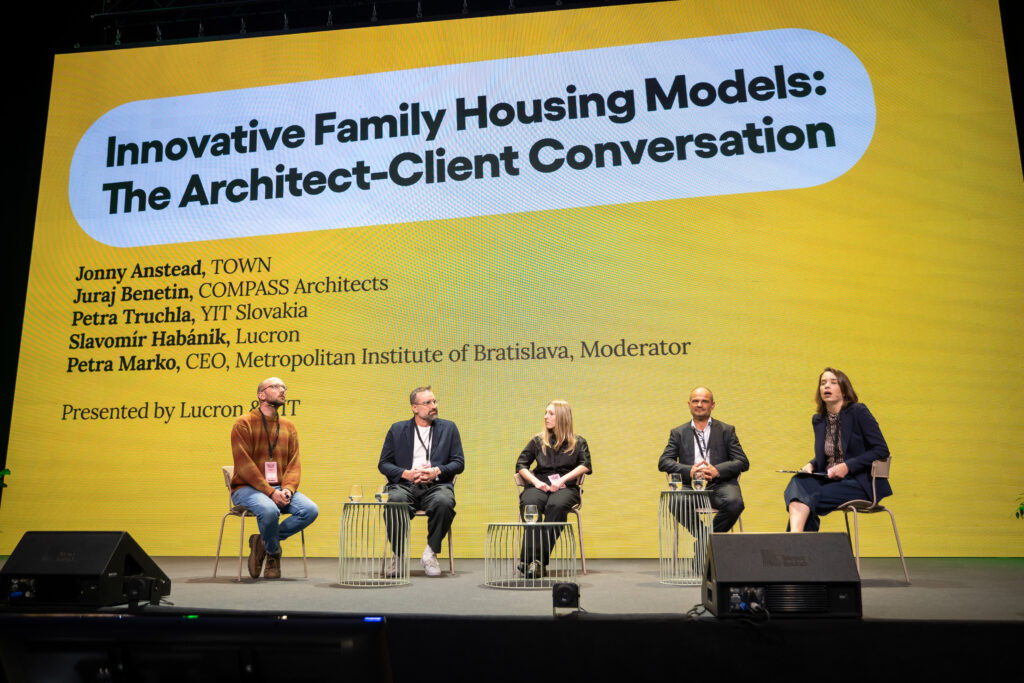
Earlier this month, Jonny Anstead represented TOWN at the Start With Children summit in Bratislava—a two-day gathering of designers, planners, and policymakers posing a simple yet transformative question: what would our cities look like if we designed them around the needs of children? Read on for his reflections on the Summit.
This was the second annual edition of the summit, initiated by the Mayor of Bratislava alongside the Metropolitan Institute of Bratislava. Hosted at the historic Old Market Hall, the event brought together an inspiring range of international voices working at the intersection of childhood, urban design, and community life.
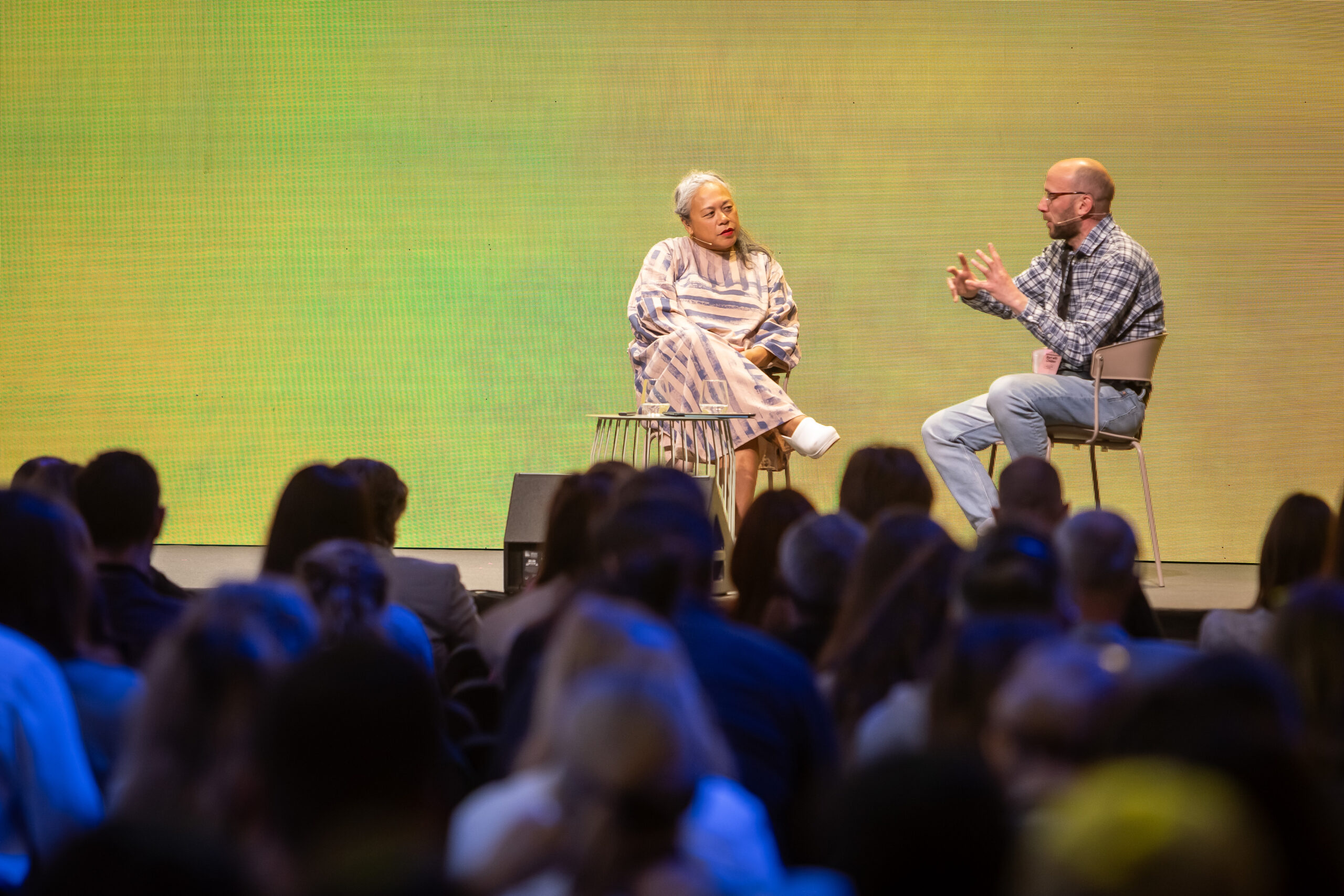
Jonny Anstead and Angela Garbes opening the Bratislava Summit.
Opening the summit, I shared the stage with the brilliant writer and advocate Angela Garbes, author of Essential Labor, whose work reframes caregiving as vital societal infrastructure. In our session, titled “In Search of Community,” we explored how neighbourhoods and communities can foster networks of mutual care that benefit both children and their caregivers.
Angela introduced the audience to the Philippine tradition of bayanihan, a powerful symbol of community cooperation and solidarity, where neighbours physically lift and move a wooden home threatened by floods to safety. Drawing from this image, she reflected on her experiences of cultivating mutual support in her own community in Seattle, where she and others have adopted a more consciously intentional and collective approach to raising their families, aiming to build a modern equivalent of this communal ethos.
Echoing some of these themes, I outlined the roots of the modern cohousing movement, particularly inspired by the influential 1972 Danish newspaper article, “A child should have 100 parents,” by Bodil Graae. Graae’s argument was that the nuclear family alone is insufficient for nurturing children effectively; community is needed. Her call to action led directly to Denmark’s first cohousing communities.
“Somewhere where we could hang out with other adults and have a bit of that shared responsibility. It takes the pressure off when you’re a nuclear family and it’s just you and your children.”
Resident at Marmalade Lane.
The principle of 100 parents is vividly evident at Marmalade Lane, borne out through the accounts of residents—parents and children. The cohousing model offers parents meaningful daily support during the inherently challenging years of raising young children. Simple yet profound advantages—such as sharing a cup of tea after sleepless nights or having informal childcare support next door—are built into the fabric of community life, contrasting sharply with the isolation often experienced by parents in conventional housing.
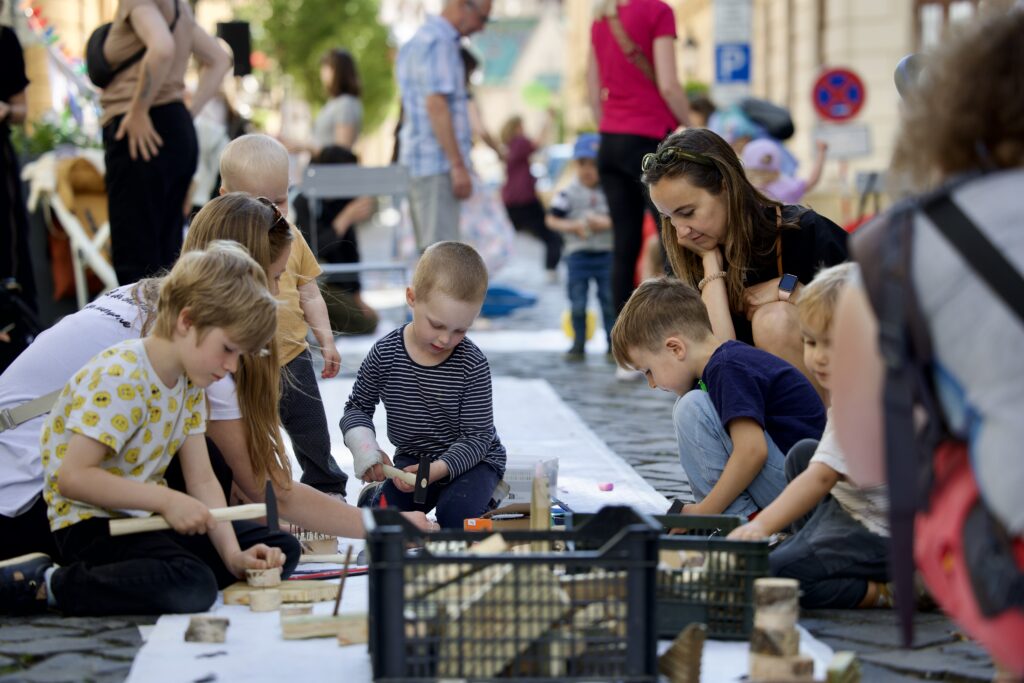
Play Street, Bratislava.
“In my old house I couldn’t just play with my friends, that had to be arranged.”
A young resident at Marmalade Lane.
For children, the benefits of cohousing are perhaps even more profound. In an era marked by diminishing childhood independence, cohousing provides children with a rich and safe environment where play, nature, and exploration are woven into the fabric of the place. For kids, Marmalade Lane is a ‘one-minute neighbourhood’, with trampolines, trees for climbing, and safe space for bikes and scooters, all on the doorstep, together with other children to play with. Just as importantly, this offers children greater autonomy, allowing them to manage their own social lives and choose when and how to engage with their peers.
Of course, these ideas go beyond cohousing; they speak directly to fundamental challenges faced by developers, architects, and urban planners tasked with creating new homes and neighbourhoods. How can we foster genuine communities—places where people know their neighbours, experience less isolation, and enjoy everyday support? How can we reshape environments to prioritise children’s needs amid a culture and planning system that often values cars and bins more highly than young people?
A resounding theme throughout the summit was clear: when we design for children, we unlock wider public benefits, including greener streets, enhanced biodiversity, improved water management, and stronger community ties. Simply put, environments that work well for children invariably create better places for everyone.