26th May 2026.
Can cohousing reduce urban loneliness? TOWN features in Monocle’s The Urbanist.
Share
Monocle Radio’s The Urbanist recently explored the question: could cohousing help address urban loneliness? The episode centred around an interview with TOWN cofounder Jonny Anstead, followed by a written feature titled How to age in a dignified way: know your neighbours.
The episode explored how the physical design of cohousing neighbourhoods with shared community life, can help create the conditions for stronger everyday relationships between neighbours.
One aspect of the discussion was around the idea of ‘social maths’ in design. Cohousing communities are intentionally planned around a scale where people can realistically get to know one another and share resources, spaces and responsibilities. Rather than relying on formal support structures alone, cohousing creates opportunities for the small, repeated interactions that build familiarity, trust and mutual support over time.
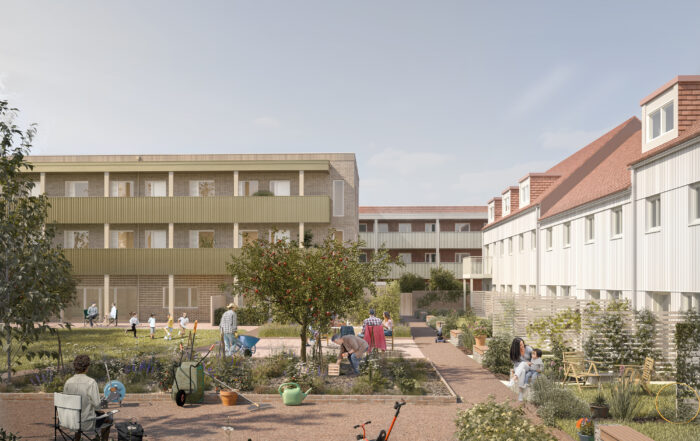
These interactions are often very simple: chatting while gardening, eating together in a common house, children playing outside while adults talk nearby, or neighbours noticing when somebody might need support. Individually they may seem incidental but together they help create a stronger sense of belonging and connection.
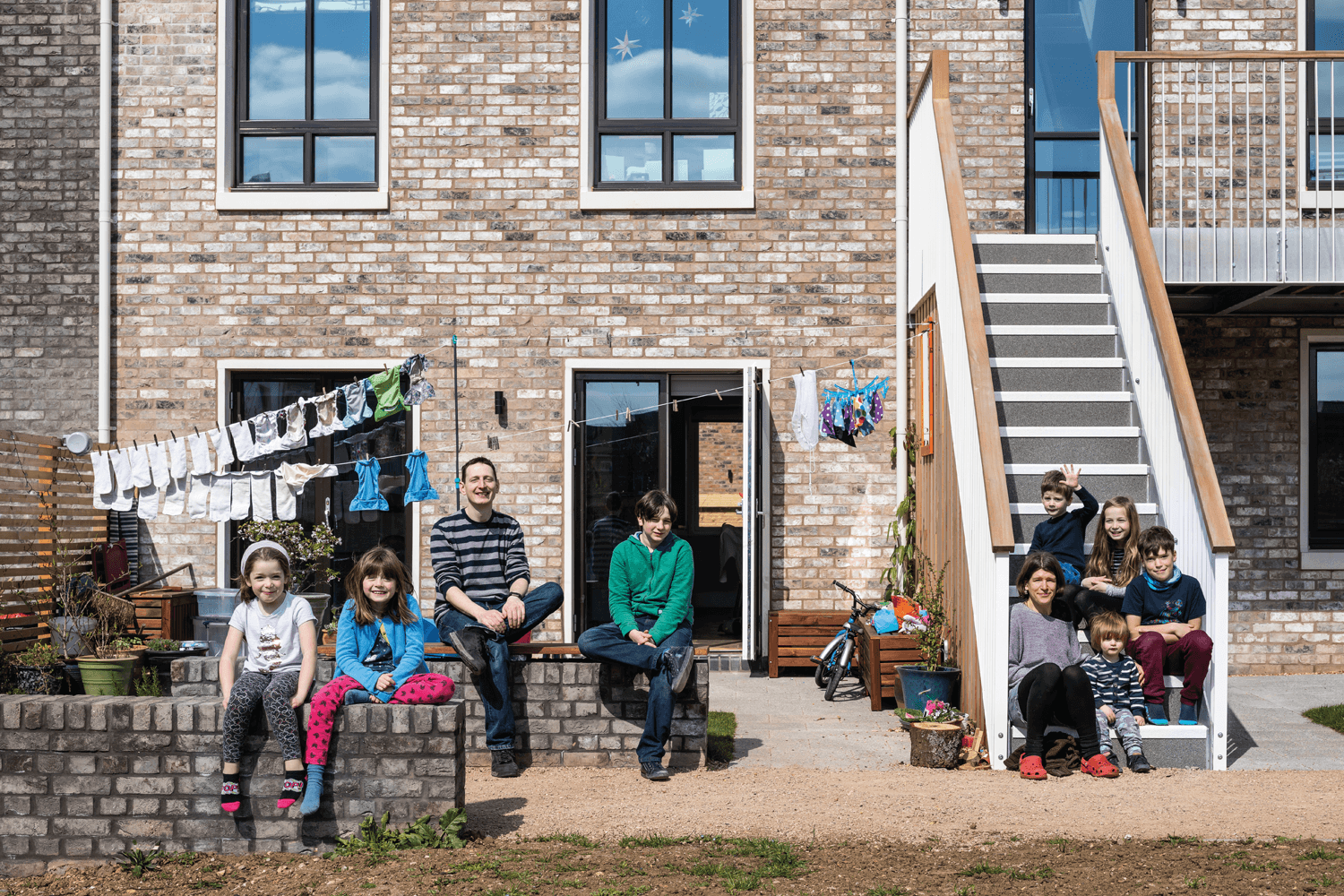
Marmalade Lane’s shared car-free street.
In 2025, the World Health Organization published findings showing that one in six people globally is affected by loneliness, with social isolation linked to poorer physical and mental health outcomes. The report highlighted that strong social connections are associated with better health, longer life expectancy and improved wellbeing.
The findings showed that loneliness can affect people at any age but older adults are often particularly vulnerable. Many existing housing models are poorly designed for later life, often separating generations and reducing opportunities for everyday interaction. Cohousing offers a different model, where older people remain part of a mixed and active community rather than becoming socially isolated.
“We’re all living longer. We’re all ageing. The question of how we grow older in a way that is dignified, while maintaining quality of life and addressing the risks of isolation, which become greater as you grow older, is critical.”
Jonny Anstead in The Urbanist podcast.
Intergenerational communities also provide meaningful benefits for children, parents and younger adults. Children gain greater independence and familiarity with neighbours, parents often experience more informal support, and residents of different ages are able to contribute to community life in different ways. The connection between cohousing and reduced loneliness is increasingly supported by research. A report by the London School of Economics titled Those little connections: community-led housing and loneliness explored how community-led housing can help reduce social isolation by increasing opportunities for everyday social contact and mutual support. The report found that community-led housing models can help encourage stronger neighbourly relationships through shared spaces, collective decision-making and informal interaction. Rather than treating loneliness as purely an individual issue, the research highlights the role that the built environment and housing models can play in shaping social connection.
TOWN’s own post-occupancy research at Marmalade Lane reflects many of these findings. Residents consistently describe the sense of community as one of the most valuable aspects of living there. In TOWN’s social impact research, 86% of residents said that the sense of community and belonging was the best thing about living at Marmalade Lane.
As pressures around ageing, mental health and social isolation continue to grow, the question raised in Monocle’s interview feels increasingly important. Loneliness is often discussed as an individual problem, but it is also shaped by how we design homes, streets and neighbourhoods — and by whether those places can facilitate connection in daily life.
Join our mailing list
For news and project updates